Fortress Stabilization Case Study
Steel Beam Replacement with Carbon Fiber in Milwaukee, WI
Severely Deflected Basement Wall Reinforced with InvisiBeam® and Shear Pin System
The Challenge
Milwaukee, WI is quite a bit different from most cities when it comes to their codes for foundation repair. Steel beams were the only approved method for lateral basement wall reinforcement until one engineer discovered InvisiBeam and is now helping re-write the codes.
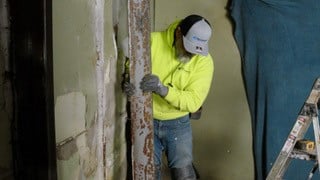
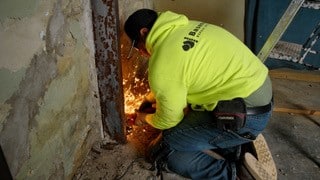
For this project, the city actually approved a design that called for a removal of steel beams and having them replaced with Carbon - and the only carbon that could do the job was the Fortress InvisiBeam system.
The Solution
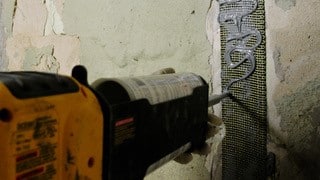
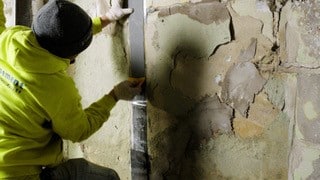
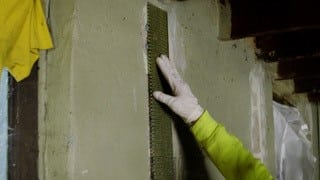
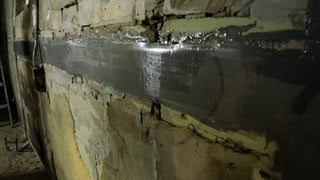
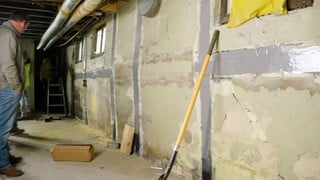
With steel beams no longer sufficient, VM Engineering designed a more robust approach using Fortress InvisiBeam® carbon fiber straps. The steel beams were removed and replaced with fully anchored InvisiBeam® reinforcement, offering superior strength with a clean, low-profile finish.
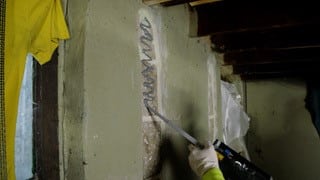
Because the wall had bottom shear sliding, shear pins with core fill were added to stop further movement. Horizontal straps were also installed beneath basement windows to reinforce weakened areas.
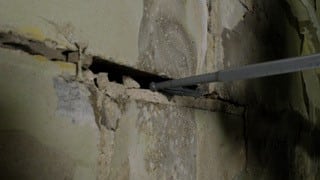
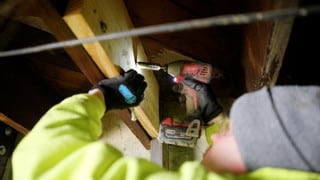
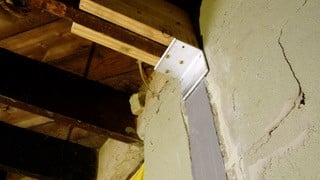
Due to limited access to the rim joist, Fortress aluminum angle brackets were used for top anchoring, with extra lumber added for strength. Extensive horizontal cracks were repaired using Xtreme 4070 epoxy.
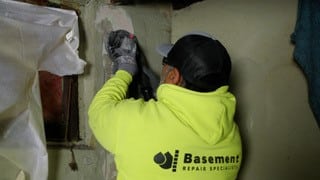
The installation by Basement Repair Specialists met all engineering specs, passed city inspection, and delivered lasting structural stability.
The Outcome
The failing wall was successfully stabilized using Fortress InvisiBeam®, shear reinforcement, and epoxy injection—all without excavation or bulky steel supports. The upgraded carbon fiber solution met the city's enhanced structural requirements and provides lifelong protection with a clean, space-saving finish.
Why It Matters
When traditional methods fall short—like steel beams or push-back corrections—carbon fiber offers a smarter, stronger, and more adaptable solution. This case demonstrates how Fortress technology can not only replace outdated methods but exceed them, even under challenging site conditions.
Installation Photos - Click to Expand